

Ships are
already moving
through the harbor
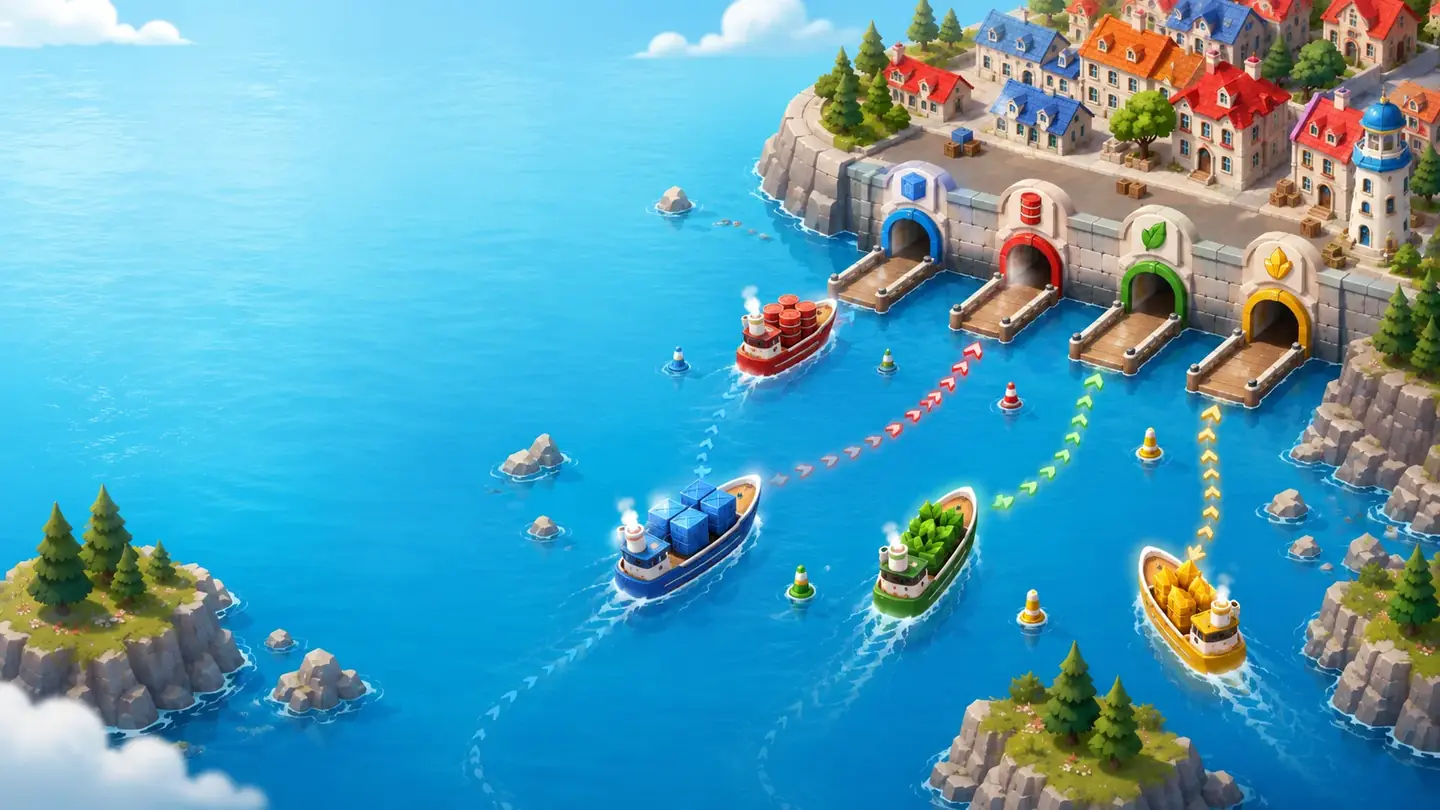
No ship waits for instructions here.
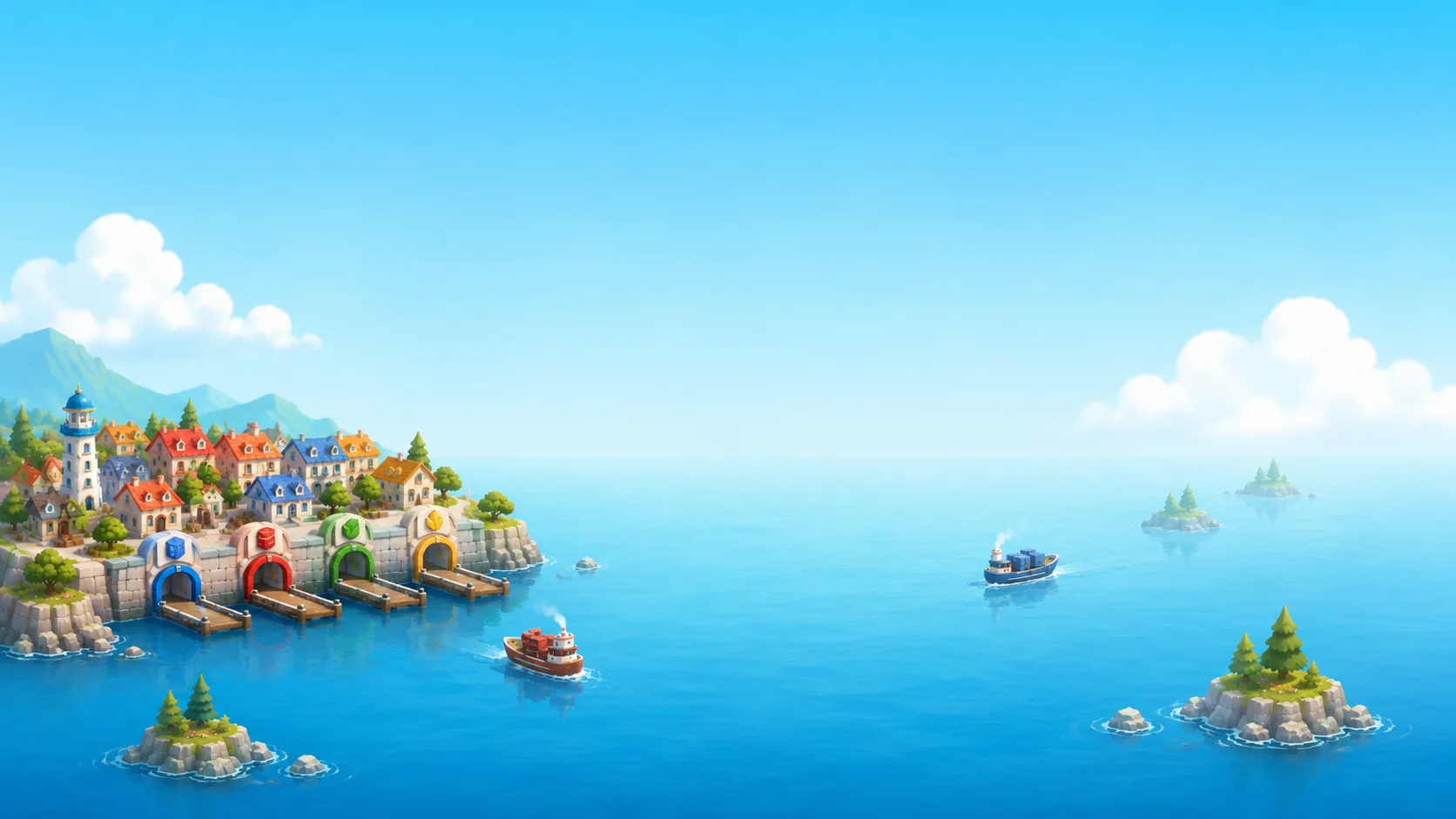
They keep coming, one after another, moving through open water toward a set of docks that can only handle so much at once.
Your job is not to drag them into place.
Your job is to understand the pattern before it turns into pressure.
Harbor Plain is basically a puzzle game where you're constantly juggling ship routes and timing - there's always something moving.
A puzzle built from
movement, not interruption
I started wondering - what if puzzle pieces just wouldn't sit still?
Instead of treating the harbor as a static board, the game turns it into an active stream. Ships arrive with purpose. Docks open and close through use. Lanes become valuable, blocked, or risky depending on what you do a few moments earlier.
This completely changes how the game feels. Instead of thinking move by move, you're thinking about the whole flow.
You guide routes, not vessels
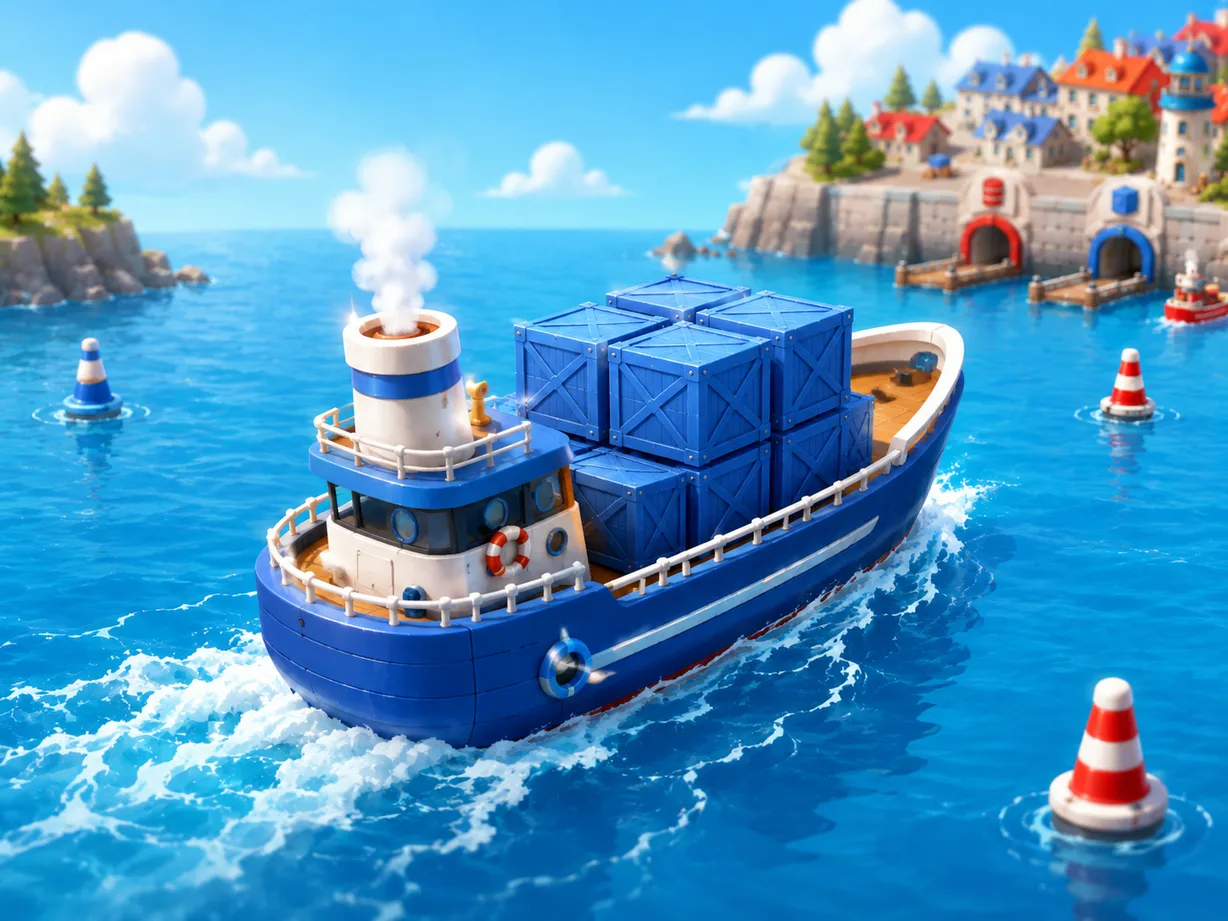
Each incoming ship has a destination, but reaching it is not automatic.
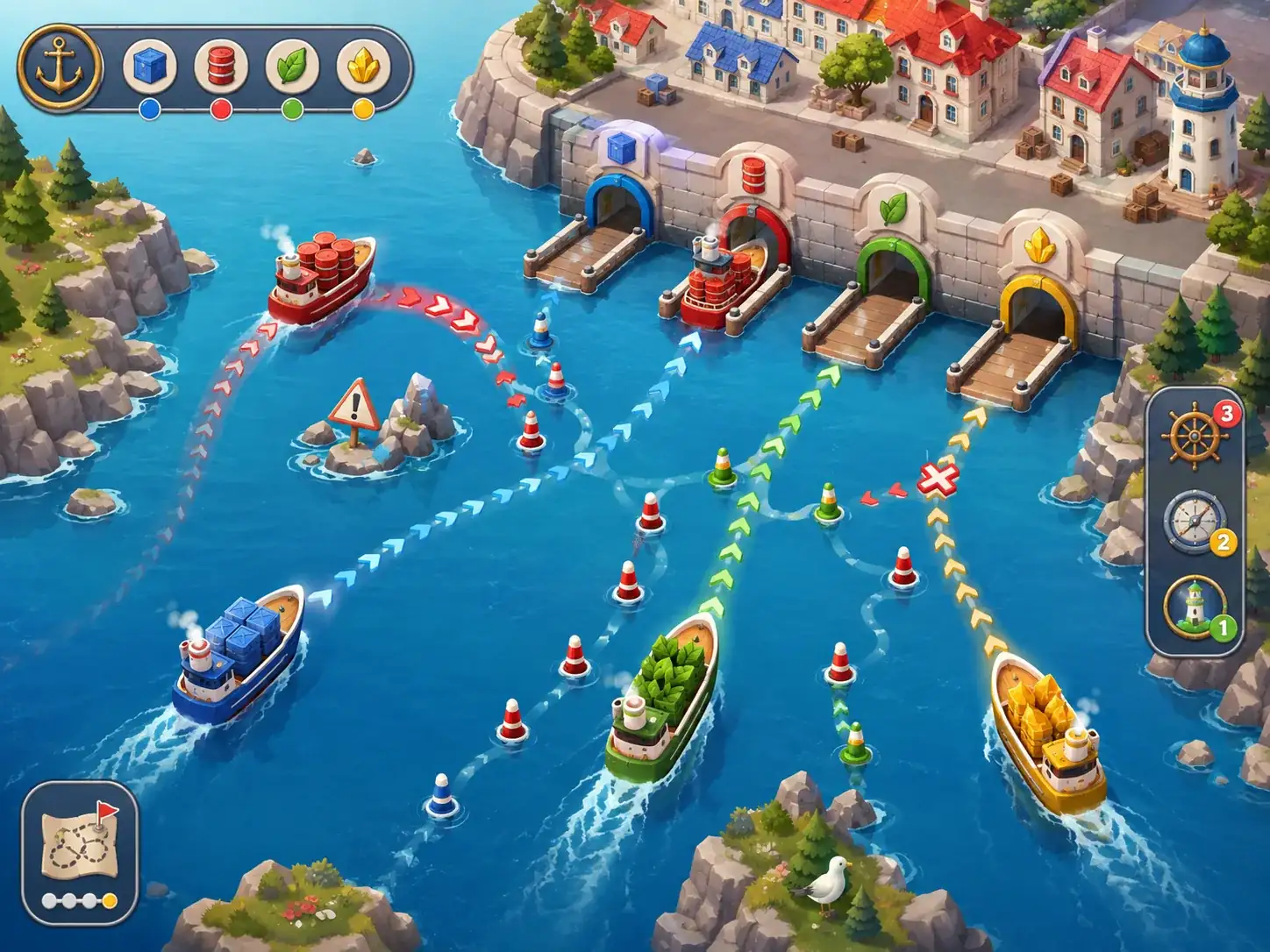
You redirect harbor lanes, open route paths, and decide which vessel gets access first. Some ships match by color. Others depend on cargo type. Some levels look simple until a second arrival turns one correct choice into the wrong sequence.
What really gets you hooked is that you're always thinking one step ahead.
You’re never just solving what is happening now — you’re solving what is about to happen next.
How the harbor works
I want the controls to feel smooth and easy, but the strategy should run deep. Even a basic level becomes more interesting once two ships compete for the same opening. The game gains difficulty not by overloading the screen, but by making each available path more important.
 Route incoming ships to the correct docks
 Match vessels by cargo type or color markers
 Manage limited docking slots across the harbor
 Plan movement order before lanes become blocked
 React to route conflicts without direct ship control
Every dock changes
the next decision
The port may look open, but usable space disappears quickly.
Once a dock is occupied, the value of surrounding routes changes immediately. A lane that felt safe a few seconds ago may now lead to congestion. A correct match made too early can block the vessel that mattered more. You start realizing the docks aren't just where ships go - they're actually part of the puzzle.
That is where Harbor Plain becomes satisfying.
It rewards players who think in chains, not isolated moves.
Common questions
What kind of game is Harbor Plain: Dock Control?
Harbor Plain: Dock Control is a puzzle and logic game set inside a structured harbor environment. Players manage incoming ships by guiding them toward the correct docks through route planning and sequence control. The challenge comes from reading motion and predicting how one decision affects the next. It’s a system-based game that feels calm visually but grows more strategic over time.
Do I move the ships directly?
No, the ships continue moving on their own. Instead of dragging them manually, you control the harbor paths and decide how movement is shaped in front of them. This creates a more thoughtful gameplay loop where timing and planning matter more than direct contact. The result feels dynamic without becoming messy.
Is the game difficult to understand at the beginning?
The early levels are designed to be clear and readable. Players first learn basic route matching, dock usage, and the importance of simple order. As the game progresses, these same ideas begin to interact in more demanding ways. That means the complexity grows naturally rather than arriving all at once.
What makes the game different from other puzzle games?
The biggest difference is that the puzzle pieces never fully stop. You are not solving a frozen board — you are working inside an active system where ships continue arriving and available space changes constantly. That makes anticipation much more important than simple matching. It gives the game a distinctive rhythm built on motion and consequence.
Does the game rely on speed or reflexes?
Not in the usual sense. While there is always movement on screen, the real challenge is logical timing rather than fast tapping. Players are rewarded for understanding patterns, not for rushing. The pressure comes from sequence management, not from pure reaction speed.
What happens when I make a mistake?
A wrong decision usually affects more than one ship. A dock may fill too early, a route may become blocked, or a later arrival may lose its only possible path. That makes mistakes feel connected to the system rather than random. It also gives players useful feedback that helps them improve on the next attempt.
Are there support tools for harder levels?
Yes, the game can include hints, extra moves, and optional assist features. These tools are meant to reduce frustration without removing the need to think. Players still need to understand the harbor layout and the sequence of decisions. The support layer should feel helpful, not invasive.
Is Harbor Plain more relaxing or more intense?
It's kind of both, honestly. Looks pretty chill, but there's this underlying stress because stuff keeps happening and you're running out of room. That contrast gives the game its personality. It feels peaceful to look at, but mentally engaging to solve.